What Makes Modular Operation Theaters Different?
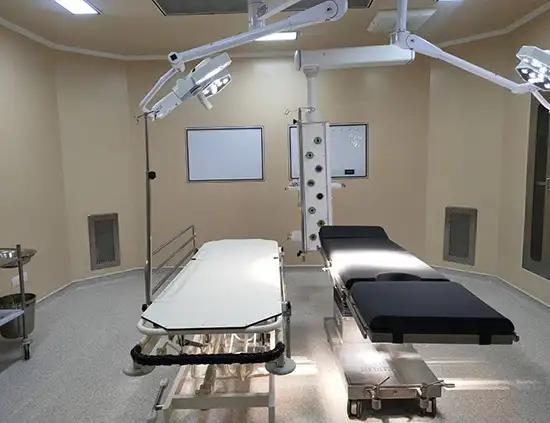
·Modular operation theaters are advanced surgical suites constructed using prefabricated, factory-built components that are assembled on-site to create a controlled, sterile environment.
·Unlike conventional operation rooms, which are built using traditional construction methods, modular OTs are designed for precision, flexibility, and enhanced infection control.
·The development of modular OTs began as healthcare facilities sought faster, cleaner, and more adaptable solutions to meet rising infection control standards.
·Their design fundamentally supports infection control by minimizing contamination risks through seamless construction, integrated systems, and customizable features.
· Key differences:
Prefabricated Design: Factory construction ensures consistent quality control and reduces on-site contamination.
Integrated Systems: All components- walls, ceilings, HVAC, and lighting – are designed to work together for optimal infection prevention.
Customizable Solutions : Modular OTs can tailored to specific hospital requirements, supporting specialized infection prevention protocols
Key Design Features That Reduce contamination
Specific physical features of modular operation theatres are engineered to minize infection risks, setting them apart from traditional operating rooms.
1. Seamless Wall And Ceiling Panels
·Seamless construction eliminates crevices and joints where bacteria and dust can accumulate, reducing the risk of contamination.
·Panels are made from non-porous, antimicrobial materials that inhibit bacterial growth and withstand rigorous cleaning.
·These surfaces support strict cleaning protocols, allowing for through and frequent disinfection.
·Material Benefits: Bacteriostatic properties, chemical resistance, durability.
2. Anti-Static And Bacteriostatic Flooring
·Specialized flooring prevents the growth and spread of pathogens by incorporating bacteriostatic agents.
·Anti-static properties reduce the movement of dust and microorganisms, which can be carried by static electricity.
·Corner covings eliminate sharp angles and joints, making it easier to clean and preventing dirt accumulation.
·Cleaning Advantages: These floors simplify disinfection protocols, ensuring a consistently sterile environment.
3. Hermetically sealed Doors
·Hermetically sealed doors prevent unfiltered air exchange between sterile and non-sterile zones, maintaining a controlled environment.
·Automatic door mechanisms minimize touchpoints, reducing the risk of cross-contamination.
·Each door undergoes a validation process to ensure proper sealing and pressure maintenance. Contamination Barrier: Door design maintains pressure differentials, acting as a barrier against airborne contaminants.
How Does Advanced Airflow Support Infection Control?
Air management is critical in preventing surgical site infections and maintaining a sterile environment In modular operation theaters.
1. Laminar Airflow systems
·Laminar airflow refers to the unidirectional flow of filtered air at a uniform velocity, which is superior to conventional turbulent ventilation.
·This system creates a protective envelope around the surgical field, pushing contaminants away from critical zones.
·Typical airflow rates range from 300-600 air changes per hour, meeting or exceeding international standards.
·Particle Reduction: Laminar flow minimizes airborne contaminants, significantly lowering infection risks.
2.AHU & HEPA Filtration
·HEPA (High-Efficiency particulate Air) filtration captures at least 99-77% of particles as small as 0.3 micros.
·Modular OTs use multi-stage filtration, including pre-filters and HEPA filters, to remove dust, bacteria, and viruses.
·These filter capture a wide range of contaminants, including bacteria, fungi, and particulate matter.
·Filtration Efficiency: Removes 99.77% of particles > 0.3 microns, ensuring high air quality.
3.pressure differentials
·Positive pressure rooms keep contaminants out by maintain higher air pressure inside the OT, while negative pressure rooms contain pathogens within.
·Pressure cascades are used to create a gradient, ensuring air flows from clean to less clean areas.
·Continuous monitoring systems maintain pressure integrity and alert staff to any deviations.
·Containment Strategy: Pressure gradients prevent cross-contamination between zones.
Why Modular Operation Theaters Lower Surgical Site Infection
·Studies show that modular operation theaters are associated with lower rates of surgical site infections (SSIs) compared to conventional operating rooms.
·The integration of seamless surfaces, advanced airflow, and strict environmental controls directly reduces the presence of pathogens.
·Comparative data highlights the infection control advantages of modular OTs:

How Rapid Deployment And Adaptability Improve Safety
The speed and flexibility of modular operation theaters further enhance infection control outcomes.
1.Faster Construction Times
·Modular OTs can be installed in weeks rather than months, reducing the period during which dust and contaminants are generated.
·Traditional construction may take 6-12 months, while modular installation can be completed in 4-8 weeks.
·Factory production ensures components arrive clean and ready for assembly, minimizing on-site contamination.
·Contamination Reduction: Off-site construction minimizes hospital disruption and exposure to construction-related contaminats.
2. Flexible Upgrades
·Modular systems are dsigned for easy upgrades as infection control standards evolve, allowing hospitals to stay current.
·Components can be replaced or enhanced without major reconstruction, reducing downtime and risk.
·This flexibility enables rapid adaptation to emerging pathogens or new regulatory requirements.
·Future -Proofing: Adaptability ensure ongoing compliance with evolving standards and infection prevention protocols.
Meeting international Standards For Infection Control
·Modular operation theaters are built to meet stringent international standards, ensuring optimal infection control.
·Certification and validation processes include rigorous testing of air quality, pressure differentials, and surface cleanliness.
·Ongoing compliance monitoring ensures that standards are maintained throughout the OT’s lifecycle.
· Key standards:
ISO 14644: Clean room classification requirements for airborne particulate control.
ASHRAE 170 : Ventilation standards for healthcare facilities, including air changes and filtration.
HTM 03-01: Ventilation standards for healthcare facilities, including air changes and filtration.
Partnering For Safer Healthcare Environments
·Modular operation theaters offer significant infection control benefits through advanced design, integrated systems, and rapid adaptability.
·Expert implementation is essential to maximize these benefits and ensure compliance with international standards.
·Gaddiel has extensive experience in designing and delivering infection -resistant modular healthcare infrastructure.
·Contact us to discuss your healthcare facility’s needs or request a customized solution.
Contact us
FAQs About Modular Operation Theaters And Infection Control
How do modular operation theaters integrate with hospital information systems for infection monitoring?
Modular operation theaters can be equipped with digital interfaces that connect to hospital infection control systems, enabling real-time monitoring and data-driven infection prevention strategies.
What maintenance procedures are required to maintain infection control in modular operation theaters?
Routine cleaning, filter replacement, and system validation are streamlined in modular OTs, supporting consistent infection control with simplified protocols.
How do modular operation theaters adapt to different surgical specialties while maintaining
Infection control?
Modular OTs offer customizable layouts and features tailored to various surgical specialties, ensuring that infection control measures remain robust regardless of the procedure type.


Write a comment ...